
Stop calling Christmas “Pagan.” Here’s why that argument doesn’t hold up. 🎄✝️
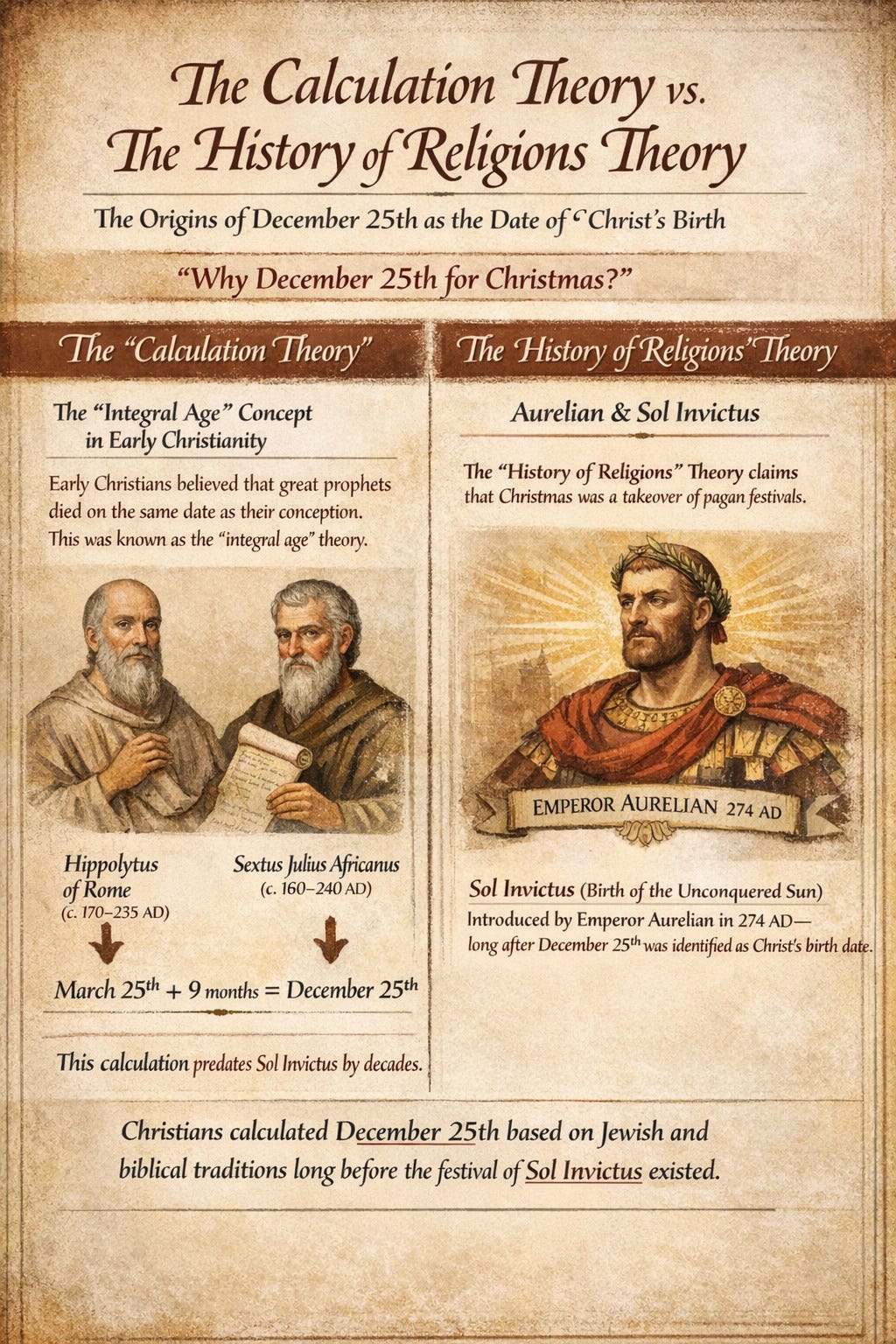
Every December, like clockwork, your timeline probably fills up with memes and angry comments claiming that Christmas is actually a secret worship of Saturn, Sol Invictus, or Nimrod. It’s become a yearly tradition for some people to try and “expose” Christmas.
But if we actually look at history, logic, and the Bible, this “gotcha” moment falls apart pretty quickly. Let’s break down why celebrating the birth of Jesus is not pagan worship.
1. The “Date” Argument: Coincidence isn’t Causation
The biggest argument is usually about December 25th. Critics say, “Pagans worshipped the sun on that day, so Christians just stole it.”
Actually, early Christians weren’t trying to copy pagans; they were doing math based on Jewish tradition. Early church historians (like Hippolytus) believed Jesus was conceived on the same date He died—around Passover (March 25th). If you add nine months to March 25th, you get December 25th.
Even if the date did coincide with a Roman festival, that doesn’t make the content pagan. If you get married on the same day as your neighbor’s birthday, are you celebrating your neighbor? No. You are celebrating your marriage. The date is just a container; the meaning is determined by the person celebrating.
2. The “Days of the Week” Logic Fail
This is where the anti-Christmas logic really crumbles. If using a date or a word with pagan origins makes you a pagan, we are all in trouble.
Sunday: Named after the sun god.
Monday: Named after the moon god.
Thursday: Thor’s Day (Norse god of thunder).
January: Named after Janus, the two-faced Roman god.
March: Named after Mars, the god of war.
Do you refuse to schedule a doctor’s appointment on “Thor’s Day”? Do you refuse to write “January” on your checks because it honors a Roman idol? Of course not. The origin of a word or date does not dictate its current meaning. If we can use “Thursday” without worshipping Thor, we can surely use December 25th to worship Jesus without worshipping Saturn.
3. The Biblical Principle of Redemption
The Bible is full of God taking things that were worldly or broken and redeeming them for His glory.
Romans 14:5-6 says: “One person esteems one day as better than another, while another esteems all days alike. Each one should be fully convinced in his own mind. The one who observes the day, observes it in honor of the Lord.”
Paul explicitly teaches that days and food are not evil in themselves; it is the heart of the believer that matters. If a Christian gathers with their family to read Luke 2, sing “Silent Night,” and thank God for the Incarnation, that is an act of Christian worship. To call that “pagan” is to judge the servant of another Master (Romans 14:4).
4. The “Tree” Fallacy (Jeremiah 10)
People love to quote Jeremiah 10, claiming it forbids Christmas trees. But read the context! Jeremiah is mocking people who cut down trees to carve them into idols to bow down and worship.
Are you carving your Christmas tree into a god? Are you praying to the Douglas Fir in your living room? No. You’re decorating it. In Christian history, the evergreen tree represents everlasting life through Christ. Symbols change meaning. The cross was originally a pagan symbol of torture and execution, yet we wear it around our necks as a symbol of hope.
5. Why the Yearly Accusation is Getting Old
Ideally, we should be united. It is frankly exhausting—and a bit lame—that every year, instead of focusing on the incredible message of the Gospel (God becoming flesh to save sinners), we get bogged down in conspiracy theories about ancient Rome.
Attacking Christmas and Easter dates creates division over secondary issues. It takes the focus off of Jesus and puts it onto history trivia. If you choose not to celebrate, that is your Christian liberty! But tearing down others who are genuinely rejoicing in the Savior doesn’t build the Kingdom.
The Bottom Line:
Paganism is the worship of nature or false gods. Christmas is the worship of Jesus Christ, the Son of God.
You cannot accidentally worship Baal. Worship requires intent. When millions of Christians wake up on December 25th, their intent is to honor the King of Kings. Let’s celebrate that.
Merry Christmas! 🎁🙏
CatholicShare Team